Across Sub-Saharan Africa, energy access remains one of the most critical barriers to economic development. In Cameroon, this challenge is even more pronounced, particularly in rural areas where millions of people still lack reliable electricity. While urban centers benefit from relatively stable power supply, rural communities continue to face limited or no access—creating a significant divide that impacts education, healthcare, entrepreneurship, and overall quality of life.
According to national data, electricity access in rural Cameroon remains significantly lower than in urban areas, with only a fraction of households connected to the grid. This disparity has far-reaching implications, not just for individuals but for the country’s broader development ambitions under Vision 2035.
It is within this context that innovative private-sector solutions are becoming increasingly important. One such initiative is “Light Up and Power Cameroon”, a transformative program led by Simo Group, aimed at addressing the energy gap through decentralized and sustainable solutions.
Cameroon’s energy sector has long struggled with structural inefficiencies, inadequate generation capacity, and uneven distribution. While the country has significant natural resources, including hydropower potential, the benefits have not been evenly distributed across regions.
Several key challenges define the current landscape:
Urban-Rural Divide: Electricity access is heavily concentrated in cities, leaving rural areas underserved.
Infrastructure Limitations: Expanding grid infrastructure to remote areas is costly and time-consuming.
Economic Impact: Limited electricity access restricts industrialization, productivity, and job creation.
Social Consequences: Communities without electricity face reduced access to education, healthcare, and digital services.
At the same time, Cameroon is undergoing a gradual transition toward renewable energy, particularly solar, which has shown rapid growth in recent years. This shift presents a unique opportunity to rethink how energy is delivered—especially in rural contexts.
While government initiatives remain central to national electrification efforts, the scale of the challenge requires active participation from the private sector. Traditional grid expansion alone cannot meet the demand quickly enough, especially in remote or low-density regions.
This is where decentralized energy models—such as solar mini-grids and off-grid solutions—come into play. These systems offer several advantages:
Faster deployment
Lower infrastructure costs
Scalability across communities
Environmental sustainability
Simo Group has positioned itself at the forefront of this transformation, leveraging both technological innovation and strategic partnerships to deliver impactful solutions.
“Light Up and Power Cameroon” is a flagship initiative by Simo Group designed to bring electricity to underserved rural communities through renewable energy solutions.
The program was launched with an ambitious goal: to electrify hundreds of rural areas across the country and create a sustainable energy ecosystem that supports long-term development.
Unlike traditional approaches, the initiative focuses on decentralized solar-powered systems, enabling communities to access reliable electricity without relying on the national grid.
What sets this initiative apart is that it goes beyond simply providing electricity. It is designed as a holistic development platform, addressing multiple layers of socioeconomic transformation.
Access to electricity enables small businesses to operate more efficiently, extend working hours, and adopt modern tools. This leads to increased productivity and income generation.
With reliable lighting, students can study after dark, while schools can integrate digital tools into their learning environments.
Healthcare facilities benefit from refrigeration for vaccines, improved medical equipment usage, and better emergency response capabilities.
Electricity is the foundation for internet access and digital services, which are critical for participation in the modern economy.
The initiative targets the electrification of over 350 rural communities, marking a significant milestone in Cameroon’s journey toward universal energy access.
This scale of deployment is particularly important because it demonstrates the feasibility of decentralized energy solutions at a national level. It also aligns with broader continental goals to improve energy access across Africa, where millions still live without electricity.
Globally, similar solar-based initiatives have already transformed lives by providing 24/7 electricity to tens of thousands of households, driving economic and social progress.
One of the defining features of “Light Up and Power Cameroon” is its commitment to sustainability. By leveraging solar energy, the initiative reduces dependence on fossil fuels while contributing to climate goals.
Key sustainability benefits include:
Reduced Carbon Emissions
Lower Operational Costs Over Time
Long-Term Energy Security
Alignment with Global ESG Standards
Cameroon’s renewable energy sector has already seen significant growth, particularly in off-grid solar installations, which are playing a crucial role in expanding rural electrification.
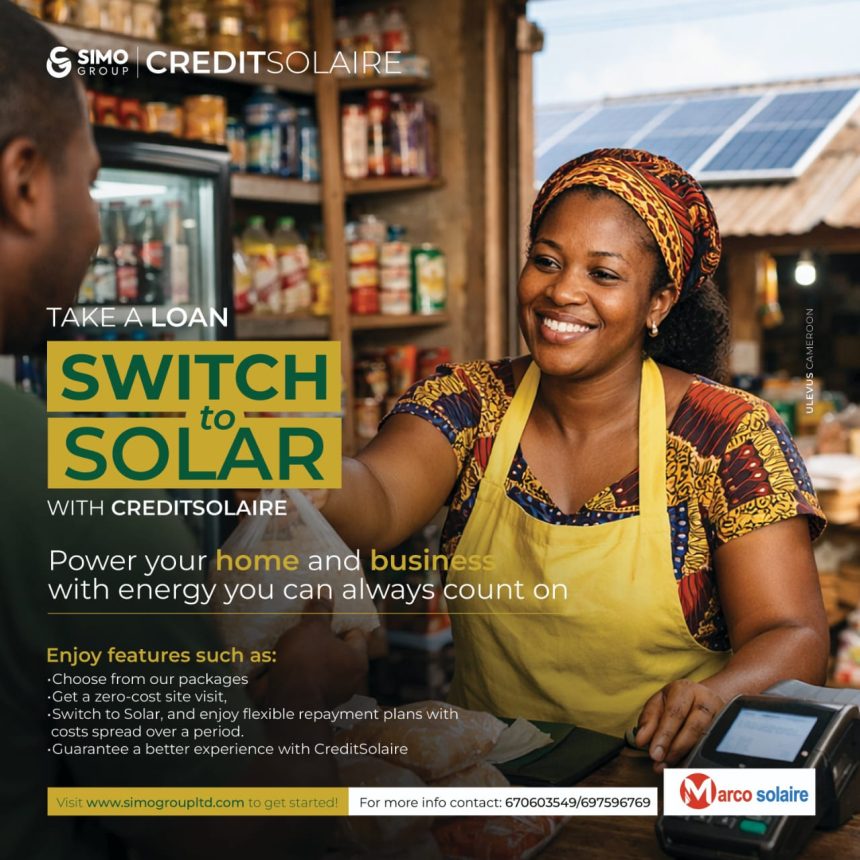
One of the biggest barriers to energy adoption in rural areas is affordability. Recognizing this, Simo Group has also introduced innovative financial solutions to support its energy initiatives.
For example, programs like solar financing and credit-based models aim to make renewable energy more accessible to households and businesses.
This approach ensures that energy access is not just available, but also affordable and scalable, enabling long-term adoption.
The success of large-scale initiatives like “Light Up and Power Cameroon” depends on collaboration across multiple stakeholders, including:
Government agencies
Financial institutions
Technology providers
Local communities
Simo Group plays a central role as a coordinator and integrator, bringing together these stakeholders to create a cohesive and effective ecosystem.
Despite its success, the initiative operates in a complex environment with several challenges:
Remote areas often lack basic infrastructure, making deployment more difficult.
Even with innovative models, scaling financing remains a challenge.
Navigating local regulations and policies requires strong expertise and relationships.
Ensuring adoption and long-term sustainability requires active community participation.
However, these challenges also provide valuable lessons for scaling similar initiatives across the region.
The success of “Light Up and Power Cameroon” highlights several key opportunities for investors and businesses:
Renewable Energy Investment
Infrastructure Development
Fintech Integration in Energy Access
Public-Private Partnerships
For companies looking to enter the African market, the energy sector presents a high-impact and high-growth opportunity.
“Light Up and Power Cameroon” is more than just an energy project—it is a catalyst for transformation. By addressing one of the most fundamental barriers to development, Simo Group is helping unlock new opportunities for communities, businesses, and the nation as a whole.
As Africa continues to evolve, initiatives like this demonstrate that innovation, collaboration, and strategic vision can bridge even the most complex challenges.
For stakeholders across the ecosystem—governments, investors, and enterprises—the message is clear:
The future of development in Africa will be powered by sustainable, inclusive, and locally-driven solutions.